
Everything You Need To Know About Sealing Artistic Pavers
/What is an “artistic paver”?
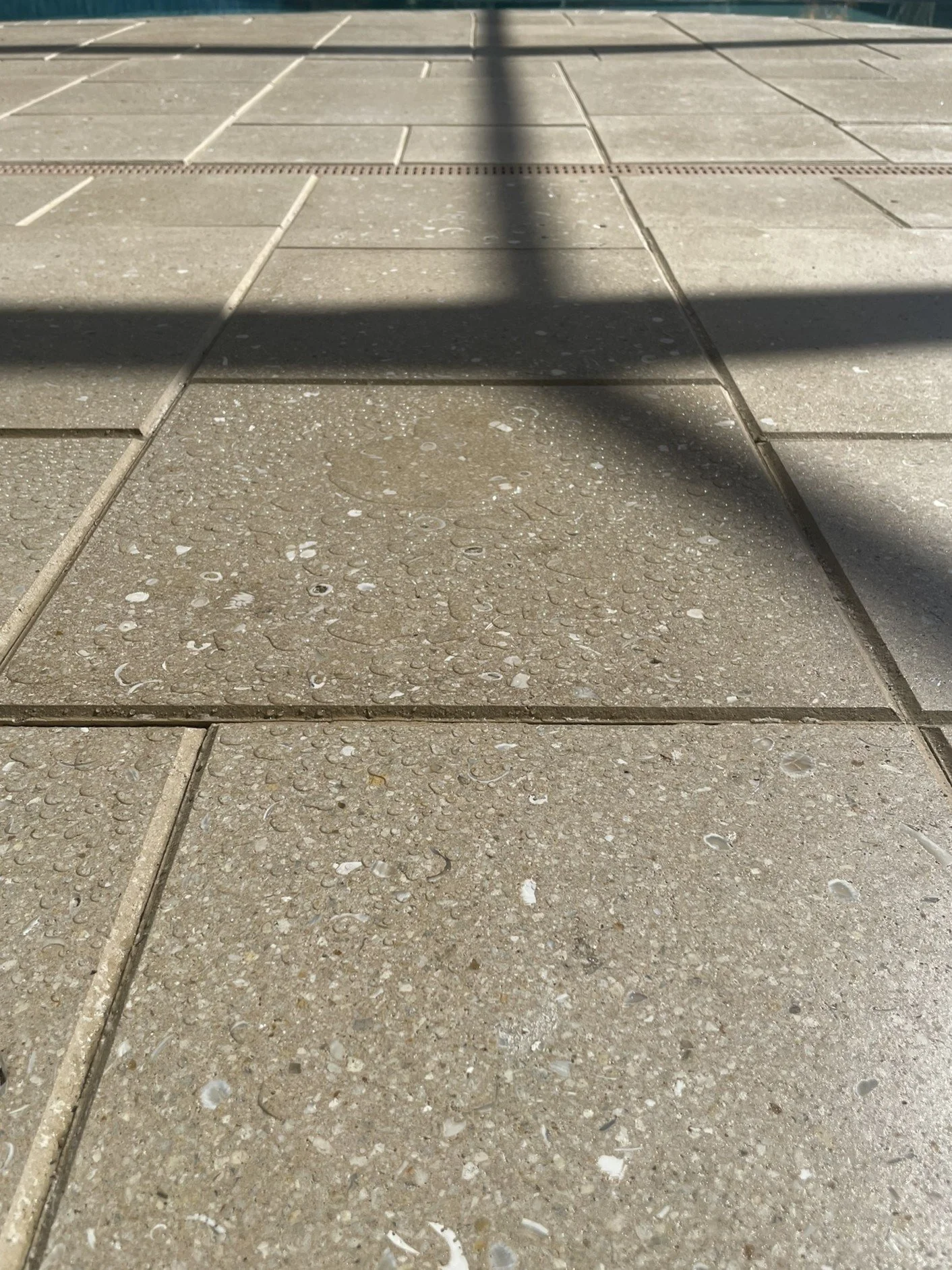
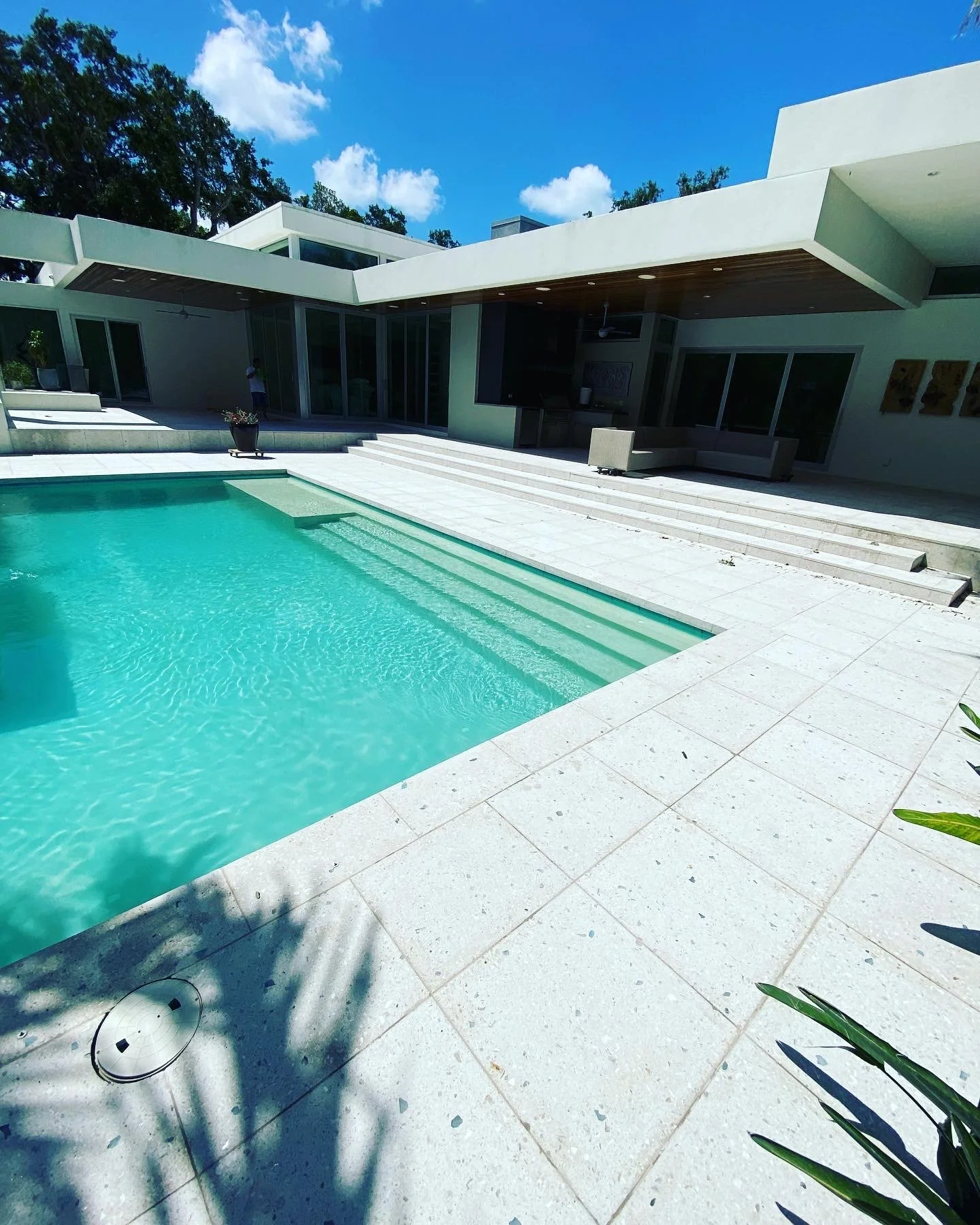
An “artistic paver” refers to a premium, decorative concrete paving stone made by Artistic Paver Mfg. These interlocking pavers are high-density and low porosity, and come in a wide range of styles, colors, and finishes. Some of the more popular options include:
Shellock - pavers with seashells
Graintelock - pavers with granite
Corallock - replicated coral pavers
Sealing Artistic Pavers
Artistic pavers are manufactured to be extremely dense and low in porosity, making them far more resistant to algae growth, spills, and staining than traditional concrete pavers. Because of this high density, the manufacturer considers sealing optional rather than mandatory. However, like all cement-based materials, artistic pavers are not completely non-porous. The fact that the surface darkens when wet indicates that moisture can still penetrate the material, leaving it susceptible over time to staining, moisture intrusion, and environmental contaminants. Applying a sealer can provide an added layer of protection by reducing water absorption, helping prevent stains, and making routine maintenance easier.
Best Sealer for Artistic Pavers
For dense, low porosity pavers, impregnating sealers are the most effective option. These penetrating sealers work by absorbing below the surface and forming an invisible, repellent membrane across the surface which inhibits water, oils, biological growth, and common contaminants from food and beverage spills. Because they do not create a surface film, they preserve the paver’s natural color, texture, and slip resistance, making them especially well suited for pool decks, patios, and walkways. Impregnating sealers also allow moisture vapor to escape, reducing the risk of whitening, peeling, or delamination over time.
High Quality Impregnating Sealers for Artistic Pavers
For artistic pavers, both solvent-based and water-based impregnating sealers are excellent options, with the choice largely depending on application preferences and jobsite conditions. Solvent-based sealers, such as Plus Impregnator and Magic, are known for their superior penetration on very dense, low-porosity surfaces, making them a strong choice when maximum depth of protection is desired. Water-based sealers, including Block Out Max 329 and Block Out 324, also perform very well on artistic pavers and provide effective protection against moisture, oils, and everyday spills. Water-based products are typically more environmentally friendly and produce significantly less odor during application, which can be beneficial in residential or occupied settings. While solvent-based sealers offer an advantage in penetration, all of these products are well suited for artistic pavers and will deliver reliable, long-lasting protection when applied properly.
Enhancing Sealers for Artistic Pavers
Enhancing or topical sealers can present challenges with artistic pavers due to the material’s high density and low porosity. On dense surfaces like these, thicker-bodied or film-forming sealers often struggle to penetrate effectively. Over time, this can lead to peeling, flaking, or delamination. In addition, enhancing and topical sealers typically increase surface slickness, especially when wet, which can create slip concerns in areas such as pool decks, patios, and walkways.
An effective enhancing sealer requires a product with a very thin viscosity that can properly penetrate the surface rather than relying on a topical coating. If these types of sealers are used, it is strongly recommended to incorporate a texture or anti-slip additive to improve traction and help maintain a safer walking surface.
Best Color Enhancing Sealer for Artistic Pavers
Teratone 467 features an exceptionally thin viscosity that allows it to penetrate and bond effectively, even on dense surfaces. It provides a rich color enhancement while delivering a smooth satin finish that enhances the natural beauty of the material. When using Teratone 467, it is recommended to incorporate CAT Grip, a micro-polymer texture additive designed to improve traction and increase slip resistance, helping maintain a safer walking surface without detracting from the finish.
Products to Avoid on Artistic Pavers
When sealing artistic pavers, it is best to avoid sealers that are not designed to penetrate dense, low-porosity surfaces. This includes two-part acrylic urethanes, high-viscosity acrylic sealers, and other topical coatings that tend to sit on the surface rather than absorb into the material. These products can struggle to bond properly, may create an uneven or slippery finish, and often require higher maintenance over time.
Summary:
Artistic pavers are premium, high-density, low-porosity concrete pavers made by Artistic Paver Mfg., including popular styles like Shellock, Graintelock, and Corallock.
Because of their density, sealing is optional, but recommended for added protection against moisture intrusion, staining, and environmental contaminants.
Impregnating sealers are the best choice, as they absorb below the surface, repel water and oils, and preserve the paver’s natural appearance and slip resistance.
High-quality solvent-based impregnators (such as Plus Impregnator and Magic) offer deeper penetration on very dense surfaces.
Water-based impregnating sealers (like Block Out Max 329 and Block Out 324) also perform well and provide a lower-odor, more environmentally friendly option.
Enhancing and topical sealers can be problematic on artistic pavers due to poor penetration, potential peeling, and increased slickness when wet.
Teratone 467 is a recommended color-enhancing option, providing rich enhancement and a satin finish when paired with CAT Grip for improved slip resistance.
Products to avoid include two-part acrylic urethanes, high-viscosity acrylics, and other topical coatings that sit on the surface rather than penetrate.
